
Contents
- 🔥 Introduction to the Second Intifada
- 🕊️ Historical Context: Israeli-Palestinian Relations
- 🏰 The Spark: Civilian Protests in Jerusalem
- 💥 Escalation: Violence in Israel, West Bank, and Gaza Strip
- 🚨 Military Operations and Suicide Bombings
- 👥 Key Players: Israeli and Palestinian Leaders
- 📊 Humanitarian Crisis: Casualties and Displacement
- 🕊️ International Involvement: Diplomatic Efforts
- 📆 The Sharm el-Sheikh Summit: A Turning Point
- 🔜 Aftermath: Lasting Impact on Israeli-Palestinian Relations
- Frequently Asked Questions
- Related Topics
Overview
The Second Intifada, also known as the Al-Aqsa Intifada, was a period of intense violence and unrest that began in September 2000 and lasted until 2005, resulting in the deaths of over 3,000 Palestinians and 1,000 Israelis. The conflict was marked by a surge in suicide bombings, rocket attacks, and other forms of violence, as well as a significant escalation of Israeli military operations in the West Bank and Gaza Strip. The Second Intifada was sparked by a visit by Israeli Prime Minister Ariel Sharon to the Temple Mount in Jerusalem, a site considered holy by both Jews and Muslims, and was further fueled by longstanding issues such as Israeli settlement expansion, economic stagnation, and political frustration among Palestinians. The conflict had significant regional and international implications, including a decline in US-Palestinian relations and a rise in anti-Israeli sentiment across the Arab world. According to a report by the Israeli human rights group B'Tselem, the number of Palestinian civilians killed during the Second Intifada was over 2,000, with many more injured or displaced. The conflict ultimately subsided with the death of Palestinian leader Yasser Arafat in 2004 and the election of Mahmoud Abbas as his successor, who pursued a more moderate approach to the conflict.
🔥 Introduction to the Second Intifada
The Second Intifada, also known as the Al-Aqsa Intifada, was a major uprising by Palestinians against Israel and its occupation from 2000. Initially sparked by civilian protests in Jerusalem and areas within Israel proper, the uprising escalated into a prolonged period of heightened violence in Israel, the West Bank and the Gaza Strip. This violence, which included shootings, suicide bombings, and military operations, continued until the Sharm el-Sheikh Summit of 2005, which ended hostilities. The Second Intifada is closely linked to the Israeli-Palestinian conflict and the history of Israel. The uprising had significant implications for the Middle East peace process.
🕊️ Historical Context: Israeli-Palestinian Relations
To understand the Second Intifada, it is essential to consider the historical context of Israeli-Palestinian relations. The 1948 Arab-Israeli War and the subsequent Six-Day War in 1967 had a profound impact on the region. The Oslo Accords of 1993 aimed to establish a framework for peaceful relations, but the Camp David Summit in 2000 failed to achieve a lasting agreement. The Second Intifada is also closely tied to the Palestinian National Authority and the Israeli occupation of the West Bank.
🏰 The Spark: Civilian Protests in Jerusalem
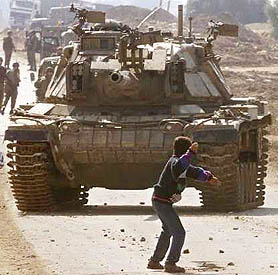
The spark that ignited the Second Intifada was a visit by Israeli Prime Minister Ariel Sharon to the Temple Mount in Jerusalem, a site considered holy by both Jews and Muslims. This event triggered widespread civilian protests in Jerusalem and areas within Israel proper. The protests quickly escalated into violence, with Palestinians throwing stones and Israeli security forces responding with force. The Al-Aqsa Mosque and the Dome of the Rock are significant landmarks in this context. The Jerusalem question remains a contentious issue in the Israeli-Palestinian conflict.
💥 Escalation: Violence in Israel, West Bank, and Gaza Strip
As the Second Intifada escalated, violence spread throughout Israel, the West Bank, and the Gaza Strip. The conflict included shootings, suicide bombings, and military operations, resulting in significant casualties on both sides. The Israeli Defense Forces (IDF) launched operations to suppress the uprising, while Palestinian militant groups such as Hamas and the Palestinian Islamic Jihad carried out attacks against Israeli civilians and military targets. The Gaza War and the West Bank are key regions in this conflict. The Israeli settlements in the West Bank are also a point of contention.
🚨 Military Operations and Suicide Bombings
The Second Intifada was marked by a significant increase in suicide bombings, which targeted Israeli civilians and military personnel. The Israeli security barrier, also known as the separation wall, was constructed in response to these attacks. The barrier has been the subject of controversy, with Palestinians arguing that it restricts their movement and Israelis claiming it is necessary for security. The checkpoint system in the West Bank is another point of contention. The Palestinian refugee camps are also affected by the conflict.
👥 Key Players: Israeli and Palestinian Leaders
Key players in the Second Intifada included Israeli Prime Minister Ariel Sharon and Palestinian leader Yasser Arafat. The United States played a significant role in diplomatic efforts to end the conflict, with President George W. Bush and Secretary of State Condoleezza Rice involved in negotiations. The European Union and the United Nations also participated in international efforts to resolve the conflict. The Quartet on the Middle East is a key player in the peace process.
📊 Humanitarian Crisis: Casualties and Displacement
The Second Intifada resulted in a significant humanitarian crisis, with thousands of Palestinians and Israelis killed or injured. The conflict also led to widespread displacement, with many Palestinians forced to flee their homes in the West Bank and Gaza Strip. The United Nations Relief and Works Agency for Palestine Refugees in the Near East (UNRWA) played a crucial role in providing aid to affected populations. The Red Cross and other humanitarian organizations also provided assistance. The Gaza blockade has had a significant impact on the humanitarian situation in Gaza.
🕊️ International Involvement: Diplomatic Efforts
The international community was involved in diplomatic efforts to end the Second Intifada, with the United States, European Union, and United Nations playing key roles. The Quartet on the Middle East was established in 2002 to coordinate international efforts to resolve the conflict. The Roadmap for Peace, introduced in 2003, outlined a framework for achieving a lasting agreement. The Annapolis Conference in 2007 was another attempt to revive the peace process. The Kerry Initiative in 2013-2014 was a significant effort to negotiate a lasting agreement.
📆 The Sharm el-Sheikh Summit: A Turning Point
The Sharm el-Sheikh Summit, held in 2005, marked a turning point in the Second Intifada. The summit, attended by Israeli Prime Minister Ariel Sharon and Palestinian leader Mahmoud Abbas, resulted in a ceasefire agreement and a commitment to restart negotiations. The summit was seen as a significant step towards ending the conflict, but a lasting agreement has yet to be achieved. The disengagement from Gaza in 2005 was a significant development in the conflict. The Hamas takeover of the Gaza Strip in 2007 has had a lasting impact on the region.
🔜 Aftermath: Lasting Impact on Israeli-Palestinian Relations
The Second Intifada has had a lasting impact on Israeli-Palestinian relations, with the conflict resulting in significant casualties and displacement. The uprising also led to increased tensions between Israel and the international community, with many countries criticizing Israel's response to the conflict. The Boycott, Divestment and Sanctions (BDS) movement has been a significant development in the aftermath of the Second Intifada. The Israeli-Palestinian conflict remains unresolved, with negotiations stalled and tensions remaining high. The two-state solution is still considered the most viable option for a lasting peace.
Key Facts
- Year
- 2000
- Origin
- Middle East
- Category
- History, Politics, Middle East
- Type
- Historical Event
Frequently Asked Questions
What was the Second Intifada?
The Second Intifada, also known as the Al-Aqsa Intifada, was a major uprising by Palestinians against Israel and its occupation from 2000. The conflict included shootings, suicide bombings, and military operations, resulting in significant casualties on both sides. The Second Intifada is closely linked to the Israeli-Palestinian conflict and the history of Israel.
What sparked the Second Intifada?
The spark that ignited the Second Intifada was a visit by Israeli Prime Minister Ariel Sharon to the Temple Mount in Jerusalem, a site considered holy by both Jews and Muslims. This event triggered widespread civilian protests in Jerusalem and areas within Israel proper. The protests quickly escalated into violence, with Palestinians throwing stones and Israeli security forces responding with force.
What were the key events of the Second Intifada?
The Second Intifada included a significant increase in suicide bombings, which targeted Israeli civilians and military personnel. The Israeli security barrier, also known as the separation wall, was constructed in response to these attacks. The barrier has been the subject of controversy, with Palestinians arguing that it restricts their movement and Israelis claiming it is necessary for security. The checkpoint system in the West Bank is another point of contention.
What was the humanitarian impact of the Second Intifada?
The Second Intifada resulted in a significant humanitarian crisis, with thousands of Palestinians and Israelis killed or injured. The conflict also led to widespread displacement, with many Palestinians forced to flee their homes in the West Bank and Gaza Strip. The United Nations Relief and Works Agency for Palestine Refugees in the Near East (UNRWA) played a crucial role in providing aid to affected populations.
What was the international response to the Second Intifada?
The international community was involved in diplomatic efforts to end the Second Intifada, with the United States, European Union, and United Nations playing key roles. The Quartet on the Middle East was established in 2002 to coordinate international efforts to resolve the conflict. The Roadmap for Peace, introduced in 2003, outlined a framework for achieving a lasting agreement.
What was the outcome of the Second Intifada?
The Second Intifada ended with the Sharm el-Sheikh Summit in 2005, which resulted in a ceasefire agreement and a commitment to restart negotiations. However, a lasting agreement has yet to be achieved, and the Israeli-Palestinian conflict remains unresolved. The two-state solution is still considered the most viable option for a lasting peace.
What is the current situation in the Israeli-Palestinian conflict?
The Israeli-Palestinian conflict remains unresolved, with negotiations stalled and tensions remaining high. The Boycott, Divestment and Sanctions (BDS) movement has been a significant development in the aftermath of the Second Intifada. The two-state solution is still considered the most viable option for a lasting peace. The Gaza blockade and the Israeli settlements in the West Bank are significant points of contention.